
Digital loyalty card for your food truck
An example rule : 8 tacos = 1 free
One message before the lunch rush.
Fictional shops, shown as examples.
Ready in three steps
- You pick this model and put it in your colours.
- Your customers scan the QR code: the card lands in their Wallet.
- One visit, one stamp. At the reward, the screen lights up.
Karim has his French tacos at Rue 21: the 8th one is on the house.
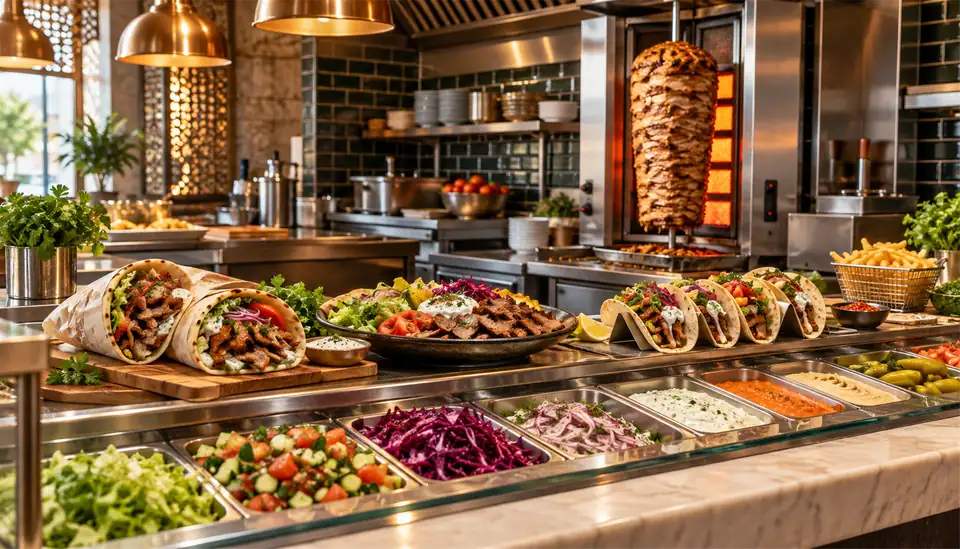


Photo stamps for your street food, or your own picture.
A digital loyalty card for a food truck is a stamp card kept in Apple Wallet or Google Wallet. The customer scans a QR code on your serving hatch once, and you stamp the card with a scan of your own. Order eight tacos and the eighth one is on the house.
A food truck has no counter drawer for cards, no shelf, and a queue that will not wait. People order standing up, phone in hand, between a meeting and a train. That is why the card lives in the phone. A stamp takes a few seconds and the line keeps moving.
Why a paper card falls short in this trade
No counter, no wallet to open
Customers order standing at a hatch, often in the rain, with a hand on a bag or a coffee. A paper card means a wallet, a pocket and a damp corner. Most simply say, next time.
Cards get wet, greasy and bent
Sauce, rain, and fingers that have just held a wrap. A paper card in a food truck queue ends up unreadable, and a stamp on a soaked card is a dispute waiting to happen.
You recognise faces, not numbers
Street food runs on faces. You know the regular who orders the same wrap every Thursday, but not his name or number. When he changes workplace and stops coming, he is gone without a goodbye.
When the truck moves, regulars lose you
Pitches change. A paper card says nothing about where you are today, and a regular who missed you twice may stop looking. A phone card can carry a message to find you again.
At the counter, in practice
Tape the A4 poster beside the serving hatch, where people wait with their phones in their hands. While the order is being folded and wrapped, the customer scans the code with the camera, enters a first name and a number, and adds the card to the Wallet in two taps. The next time, you or the cook scan the card from their screen with any phone. The stamp is added, and the customer’s lock screen lights up. No reader, no cable, no new card machine.
Reward and win-back ideas
Eight tacos, the next on the house
Give one stamp per order or per tacos, whichever matches how people buy. Cap the stamps per scan, so a group order for the office cannot fill a card in one go.
One message before the lunch rush
Tell your regulars where you are parked and what is on the board. It reaches them on the lock screen, before they decide where to eat. Broadcasts are on the Growth plan at €39 a month, with 10 a month.
Bring back the Friday regulars
When a regular stops coming, an automatic message can invite them back, perhaps with a free sauce on the next order. This win-back automation is part of the Growth plan, at €39 a month.
Welcome a first-time customer
Someone who scans for the first time can receive a short message of thanks straight away. A first order that feels noticed is more likely to become a second. Welcome messages come with Growth.
Colleagues eat together
Street food is often a shared decision. A referral reward lets a regular bring their team to your hatch and be thanked for it. Referral is part of the Growth plan at €39 a month.
Questions shop owners ask
The sign-up and the scanner are web pages, so they need a data connection on your phone. If the signal drops at your spot, a scan will wait for it. Test it at your usual pitch during the 14-day free trial, before paying anything.
A scan is a few seconds, with no typing on your side. The first sign-up is the slower part: a first name and a number, once. Let people do it in the queue while they wait for their order, and the hatch stays fast.
There is a cap on stamps per scan, a delay between two scans, and an optional approval queue where the stamp waits for you. Roles let a cashier add stamps without changing settings. The history shows who did what.
Perhaps not for them. A card helps with people who come back. If most of your trade is one-off, fewer will fill it. Check the dashboard during the trial to see how many scanned the code and came back.
Other shops
Your regulars deserve better than a lost card.
14 days to try it, no commitment. We help you build the card, by email.